

When customers ask AI who to hire, give it every reason to name you AI visibility for Kansas City businesses, and businesses well beyond it
I check what ChatGPT, Gemini, Copilot and Google's AI Overviews say about your business and your competitors, correct what they get wrong, and strengthen the sources they draw from. You may also hear it called answer engine optimization (AEO) or generative engine optimization (GEO).
Your customers are asking AI before they call.
More people now open ChatGPT, Gemini or Google's AI Mode and ask for a recommendation the way they would ask a friend. They get back a short list of names, a line or two about each, and a reason to pick one. Then they check the reviews and make the call. Around Kansas City, the questions sound like these.
The answer is assembled from your website, your profiles, your reviews and what other sites say about you. When those sources are thin, out of date or disagree with each other, AI either leaves you out or gets you wrong.
-
Where AI looks
- Your website
- Google Business Profile
- Customer reviews
- Directories and listings
- Local press and “best of” lists
- Forums like Reddit and Nextdoor
-
AI platforms
- ChatGPT
- Google AI Overviews
- Google AI Mode and Gemini
- Microsoft Copilot
- Claude
-
What the customer sees
- A short list of names
- A summary of each
- A reason to choose
- A link, a call or a visit
Nobody can edit the answer directly. You can improve almost everything it is built from.
What AI search has changed, and what it hasn't
Search results now open with AI summaries, and a growing number of people skip the results page altogether and ask an assistant. That changed where customers get their answers. It didn't change what earns a place in them.
You may have been pitched "AI SEO" as a special add-on: a file, a new kind of markup, a promise to get you cited by ChatGPT. Google's own guidance says there are no special requirements for appearing in its AI features beyond the fundamentals of good SEO. And nobody controls what an AI chooses to say, so nobody can honestly guarantee you a mention.
So why a separate service? Because the scoreboard is different, and so are some of the sources. Rankings and Maps don't tell you whether ChatGPT names you, or whether Gemini has your hours right. Finding that out takes its own checking, and fixing it often means work on sites you don't own.
What actually helps
- Accurate, consistent business information everywhere
- Pages that answer real questions with specifics
- Original content and real proof of your work
- A site AI crawlers can reach and read
- Reviews and mentions on the sites AI trusts
What you won't be sold
- An llms.txt file
- Special "AI markup" presented as a shortcut
- Content chopped into fragments for machines
- Promises of AI citations, placements or rankings
Google publishes and updates its guidance on this. If that guidance changes, the advice here changes with it.
Same foundations as SEO. A different scoreboard, and different sources.
What the work strengthens
AI answers draw on four things you can actually influence. A check of where you stand shows which one is costing you mentions, so the effort goes there first instead of being spread evenly across everything.
Accurate facts everywhere
Your name, hours, phone, services and service area match across your website, Google Business Profile, Bing Places, Apple Business Connect, Yelp and the directories in your industry, so AI repeats the right details.
Answers worth quoting
Service pages and FAQs that answer the questions people ask AI, with real numbers, specifics and plain language instead of slogans.
Presence where AI looks
Reviews, directories, "best of" lists, local press and community sites that AI cites for your category, in Kansas City and in your industry.
A site AI can read
AI crawlers allowed in, key content visible without scripts, and structured data that spells out who you are, where you are and what you do.
Search gets you found. AI visibility gets you named.
How AI decides who to mention
Each platform builds its answer a little differently. That's why one can recommend you while another acts like it has never heard of you.
Google AI Overviews
Sit on top of regular Google results and lean heavily on business websites, including yours, to answer local questions.
Google AI Mode and Gemini
Draw on Google's index along with Business Profile and Maps data, so your profile, categories and reviews carry real weight.
ChatGPT, Copilot and Claude
Search the web as they answer, through their own crawlers or engines like Bing, then lean on review sites, directories and lists. They don't always agree with each other.
That's why the work covers your site, your profile and the sources around them, and why I check each platform separately.
Platforms I check
Answers change from day to day, so I measure how often you're named over time, not one screenshot.
A clear process for building AI visibility
The work is planned around the questions that bring you business, not every question that mentions your industry. The last step feeds straight back into the first.
See where you stand
I ask each AI platform the questions your customers ask, the way they ask them, for your business and for the competitors you lose work to. You see the answers side by side.
Fix what's wrong
Wrong hours, an old phone number, a service you stopped offering. Each mistake is traced to the listing or page it came from and corrected there. Crawler access is opened and structured data tightened.
Build answers
Create or improve the service pages and FAQs that match how people actually ask, with the specifics AI needs to describe you accurately.
Earn mentions
Strengthen your reviews, listings and the third-party sources AI relies on for your category. The honest way: no fake reviews and no planted forum posts.
Measure & adjust
Re-check the same questions every week, report what changed, and move the effort to wherever it's doing the most good.
Core areas of work
Not every business needs all eight at once. The mix depends on where you stand today and who you're up against, and it shifts as the work builds.
- AI answer monitoring. The questions your customers ask, checked on each platform, every week.
- Competitor share of AI voice. Who gets named instead of you, and how often.
- AI accuracy corrections. Wrong details traced to their source and fixed there.
- Answer-ready content & FAQs. Pages that say plainly what you do, where and for whom.
- Entity & structured data. Schema and consistent facts that tell machines exactly who you are.
- AI crawler access. Making sure a security plugin or robots.txt isn't quietly shutting AI out.
- Reviews & citation sources. The review sites, directories and lists AI trusts for your category.
- AI referral tracking. Visits from ChatGPT, Gemini, Copilot and others separated out in Google Analytics, along with what those visitors did next.
Need to be seen in AI answers now? There are ads for that.
Earning a mention takes time, and nobody controls it. Advertising inside AI platforms is the paid side of the same moment: labeled, sponsored placements you can turn on, target and measure. I plan, build and manage them alongside your Google Ads and Microsoft Advertising.
ChatGPT ads
OpenAI now sells ads inside ChatGPT. They appear below the answer, marked as sponsored, for people on the Free and Go plans. OpenAI says ads don't change what ChatGPT recommends, so buying an ad and earning a mention are separate jobs. Some categories face extra review or aren't allowed.
Google AI Overviews & AI Mode
Search, Shopping and Performance Max campaigns can show as sponsored placements inside Google's AI Overviews and AI Mode. There's no separate campaign to buy, so your keywords, assets and landing pages decide how you show up there.
Microsoft Copilot
Microsoft Advertising places ads inside Copilot answers, in Bing and in the Edge browser, built from the same campaigns that run on Bing search. Often overlooked, and worth a look for B2B and desktop-heavy audiences.
How AI ads are run
- Judged by qualified inquiries and cost per qualified inquiry, not clicks
- Conversion tracking in place before spend starts, so calls, forms and bookings are counted once each
- Tested with a defined budget next to Google, Meta and everything else, and kept only if it earns its place
- Planned together with your organic AI visibility, so you aren't paying for attention you would have earned anyway
New AI ad platforms keep opening. If one is worth testing for your business, I'll tell you. If it isn't, I'll tell you that too. Search advertising
AI visibility built into recent projects
Each website case study covers how the site was built to be read, understood and cited by AI platforms, right alongside traditional search.
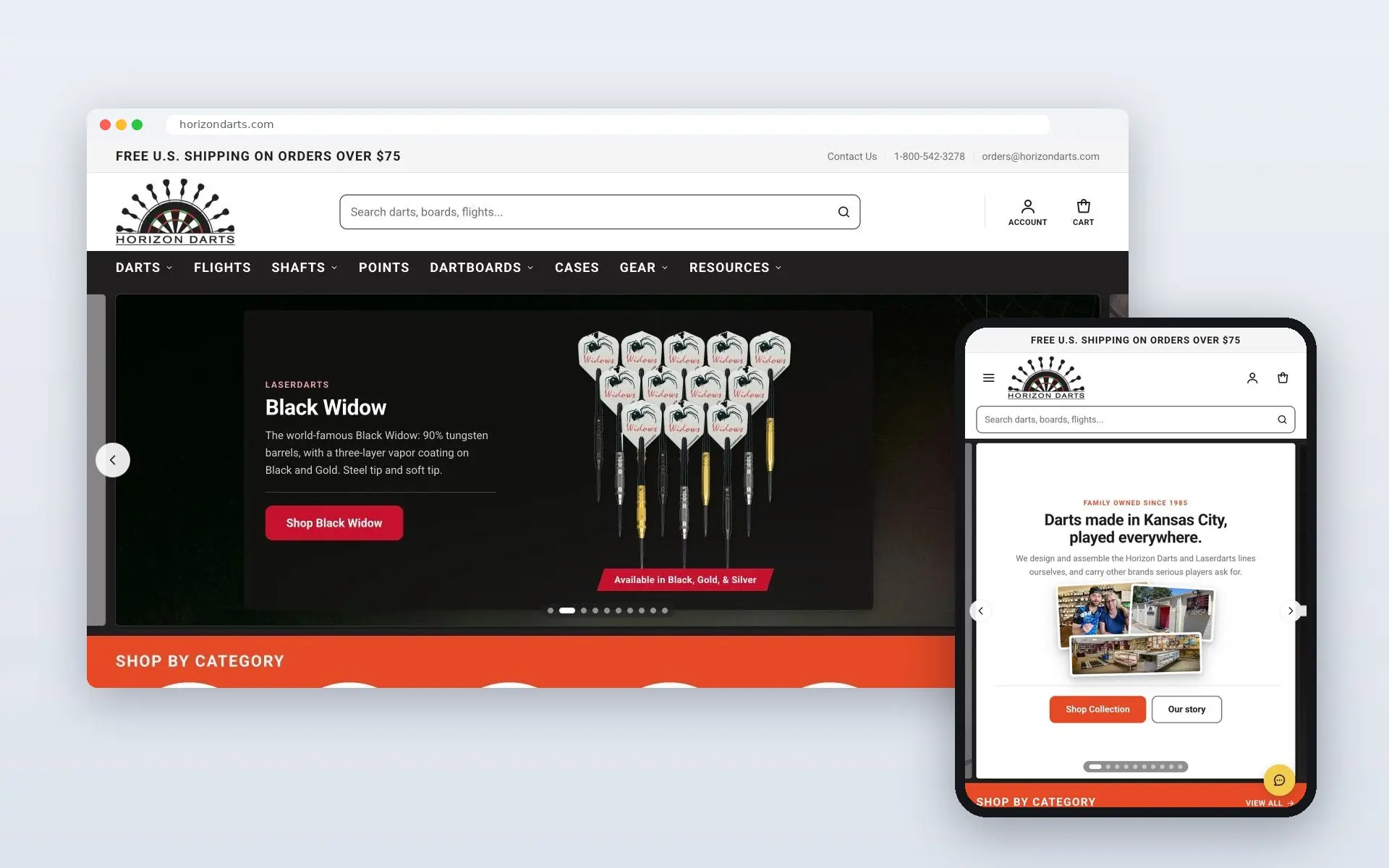
Horizon Darts
Clear facts, structured data and AI search visibility for a family-owned American dart maker and its 4,000-product Shopify store.
See how AI visibility was built in: Horizon Darts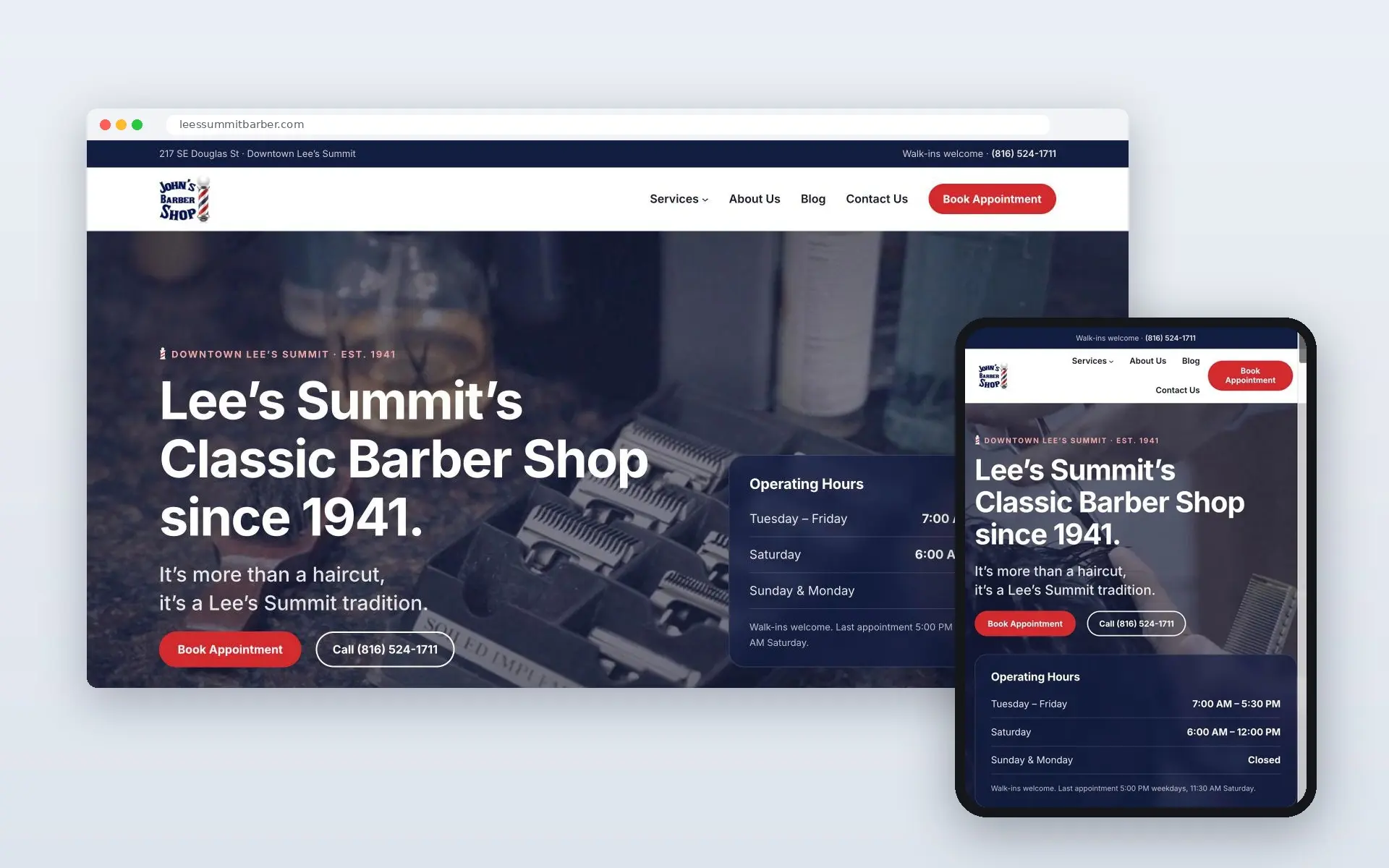
John's Barber Shop
FAQ answers written for AI search and BarberShop structured data, for people asking AI where to find a good barber in Lee's Summit.
See how AI visibility was built in: John's Barber Shop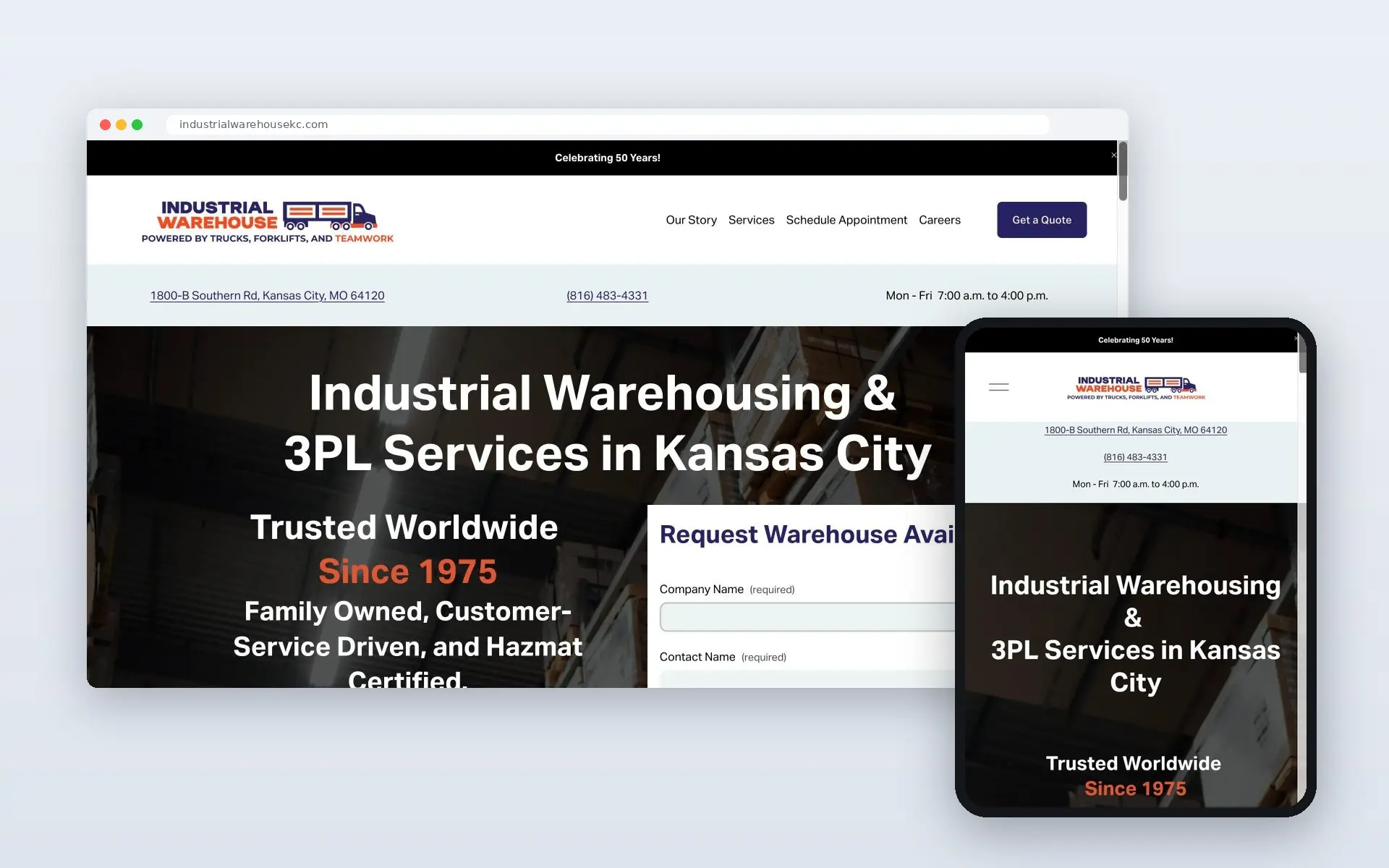
Industrial Warehouse Co.
Facts AI platforms can cite when someone asks for a hazmat-certified 3PL in Kansas City or the Midwest.
See how AI visibility was built in: Industrial Warehouse Co.
AI visibility should create more than mentions.
- Named in AI answers
- Described accurately
- Visits & calls
- Qualified opportunities
- Business growth
A mention is a signal. A customer is the goal.
How Pinpoint goes deeper
Your market, not a stock prompt list
The questions checked are the ones your customers actually ask, in Kansas City or wherever you compete, not a generic list of industry prompts.
Organic and paid planned together
Where AI doesn't name you yet, Google Ads, Microsoft Advertising or ChatGPT ads can cover the gap while the organic work builds.
Accuracy before volume
A wrong phone number in an AI answer costs you the call. Fixing what AI gets wrong comes before chasing new mentions.
Reporting focuses on action
Mentions are tracked, but reports are built around the visits, calls, forms and bookings that follow them.
How progress is measured
One screenshot proves nothing.
AI answers change from day to day and from one person to the next. So the same questions are asked on a schedule, and the reporting tracks how often you're named over time, how you compare with the competitors you lose work to, and whether what AI says about you is right. Then it connects all of that to what actually matters: visits, calls, forms and bookings. Reporting is honest about what the data can show and what it can't.
- How often you're named, platform by platform
- Your share of mentions next to named competitors
- How often your website is cited as a source
- Whether AI states your facts correctly
- Visits from AI platforms in Google Analytics
- Calls, forms and bookings from those visits
- Platforms checked
- Which AI platforms and questions were checked this period.
- Where you're named
- How often you appeared, and next to whom, compared with the period before.
- What changed
- New mentions, lost mentions and changes in how you're described.
- Corrections made
- Wrong details found, where they came from, and what was fixed.
- Visits & leads
- Traffic from AI platforms, and the calls, forms and bookings it produced.
- Next decision
- What happens before the next report.
Updates weekly in your live dashboard, summarized in your monthly report.

Kansas City answers, checked from Kansas City.
AI answers shift with location. Someone in Overland Park, Lee's Summit or Liberty can get a different short list than someone in Midtown, and Kansas City adds a wrinkle most markets don't have: two states, dozens of cities and suburbs, and plenty of businesses that serve both sides of State Line Road. I live and work here, so the local sources that shape those answers are familiar territory.
For businesses that compete across Missouri, Kansas and the rest of the Midwest, or nationally, the questions move from "near me" to "best in the region," and so do the sources AI leans on. The checks follow your market, wherever it is.
Based in Lee's Summit. Working across the Kansas City metro and well beyond it.
Works best alongside
SEO & Local Visibility
The rankings, Business Profile and site health that AI draws on. Strong SEO gives AI visibility something solid to build from.
Search Advertising
Paid search covers the searches, and now the AI answers, where you aren't named yet, while the organic work catches up.
Websites
When the site hides its answers, buries services in images or blocks AI crawlers, a rebuild fixes the problem at the root.
AI visibility questions
How is AI visibility different from SEO?
They share the same foundations. SEO is measured in rankings, Maps activity and organic visits. AI visibility is measured in whether AI platforms name you, describe you correctly and cite your website. The off-site sources AI leans on, like review sites, directories and local lists, also get more attention. If you need the rankings side, that's SEO & Local Visibility.
What do AEO, GEO and AI Overviews mean?
AEO (answer engine optimization) is about being the answer to a question. GEO (generative engine optimization) is about being included in answers that AI writes. AI Overviews are the AI summaries Google shows at the top of many search results, and AI Mode is Google's conversational search. I use "AI visibility" for all of it.
Can you guarantee ChatGPT will recommend my business?
No, and be careful with anyone who does. Nobody controls what AI platforms say. I can improve the information they draw from and show you, platform by platform, how often you're named over time.
Do I need an llms.txt file or special AI markup?
Google says its AI features don't require them. Structured data that accurately describes your business is worth having, because it helps every search engine read your site. But if someone sells you a file or markup as a shortcut into AI answers, ask them to show you the documentation.
Which AI platforms do you check?
ChatGPT, Google AI Overviews, Google AI Mode, Gemini, Microsoft Copilot and Claude. Perplexity on request.
AI answers change all the time. How do you measure anything?
By asking the same questions repeatedly and tracking how often you're named, not by one screenshot. Trends matter more than any single answer.
AI says the wrong thing about my business. Can you fix it?
Usually, yes. The wrong detail almost always comes from a source: an old listing, a directory, a review site or a page on your own website. I find the source, correct it there and re-check the answer. Some platforms pick up the change faster than others.
I already do SEO. Do I need this too?
Not always. Strong SEO helps a lot, but businesses that rank well on Google don't always show up in AI recommendations. A check of where you stand tells us whether a separate effort is worth the money, and if it isn't, I'll say so.
How long before something changes?
It depends on the platform and how often it refreshes its sources. Factual corrections often show up faster than new mentions. Nobody can honestly promise a date, and I won't.
Can you run ads in ChatGPT or in Google's AI answers?
Yes. I plan and manage ChatGPT ads, Google Ads that appear in AI Overviews and AI Mode, and Microsoft Advertising placements in Copilot. These ads are labeled as sponsored and sit apart from the answer itself, so they're a separate job from earning a mention. Like any channel, they have to earn their place in the budget. How AI ads fit
Do you work with businesses outside Kansas City?
Yes. Pinpoint is based in Lee's Summit and works with businesses across the Kansas City metro, on both sides of the state line, and across the country. Local businesses get local checks: the questions are asked the way people in your service area ask them.
Can I see where I stand first?
Yes. I'll check what the major AI platforms say about your business and two of your competitors, and walk you through what I find. Ask for a check
Talk about AI visibility
Tell me what you sell, where you want to be named, and who keeps showing up instead of you. I'll look at what AI is saying about your business, and we'll start there.
- Call or text (816) 730-2967
- Email austin@pinpt.com
- Open Monday to Friday, 9 AM to 5 PM Central
Your message comes straight to Austin, not a sales team.
Insights
Further reading
- How to rank higher on Google, Bing and other search enginesWhat Google and Bing look for, from relevance and local pages to metadata, page speed, mobile layouts and image sizes, and when to rebuild instead.
- How to show up in ChatGPT, Gemini and other AI answersMore customers ask AI before they search. How ChatGPT, Gemini, Meta AI and Copilot decide which businesses to mention, and what you can do about it.